Walther Müller, C. F. Schmidt and K. Gunther del. · Franz Eugen Köhler, Gera-Untermhaus
Week of 16 December 2024
Cacao
Part 7 of 7 in The medicine chest
Theobroma cacao
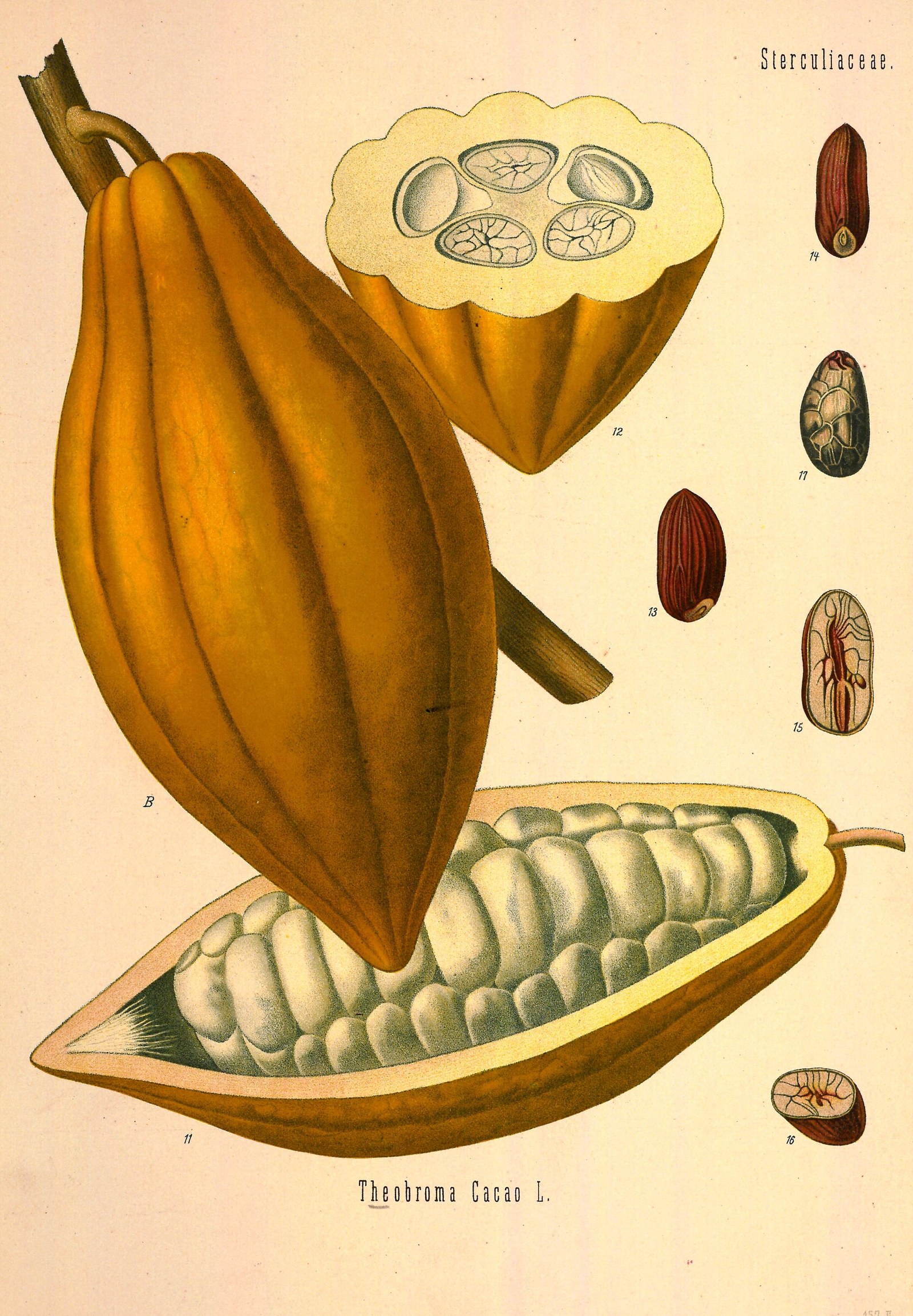
The food of the gods: the cacao tree with its pods growing straight from the trunk, source of the chocolate of the Maya, the Aztecs and everyone since.
- Published
- volume 2, 1890
- From
- Köhler's Medizinal-Pflanzen
- Drawn by
- Walther Müller, C. F. Schmidt and K. Gunther
- Technique
- Chromolithograph
- Family
- Malvaceae
- Native to
- Amazon basin; domesticated in Mesoamerica
About the plant
The cacao tree grows in the shade of taller trees in the rain forests of the Amazon and Central America, and does something few trees do: it flowers from its trunk. Thousands of tiny pink-and-white blossoms sprout straight from the bark, pollinated by midges, and a few dozen of them become ribbed pods the size of a rugby ball, yellow, red or purple, each filled with forty seeds in a sweet pulp. Fermented in heaps, dried in the sun and roasted, the seeds become cocoa, and the Olmec and Maya were doing this three thousand years ago. The Aztecs drank chocolate bitter, frothed and spiced with chilli, counted cacao beans as currency, and sent them north to Mexico as tribute.
Linnaeus, who liked chocolate, named the genus Theobroma, food of the gods, in 1753. The Spanish added sugar, the Dutch pressed out the butter, and the Swiss added milk; the tree itself has never left the tropics, and most of it now grows in West Africa. Köhler's atlas includes it because cocoa butter was, and is, a pharmacist's base for suppositories and ointments, and the plate dissects the flower and seed with the work's usual exactness.
Bought together
More in the archive