Elizabeth Blackwell del. · Samuel Harding, London
Week of 27 January 2025
Dandelion
Part 6 of 6 in Blackwell's Curious Herbal
Taraxacum officinale (published as Dens Leonis)
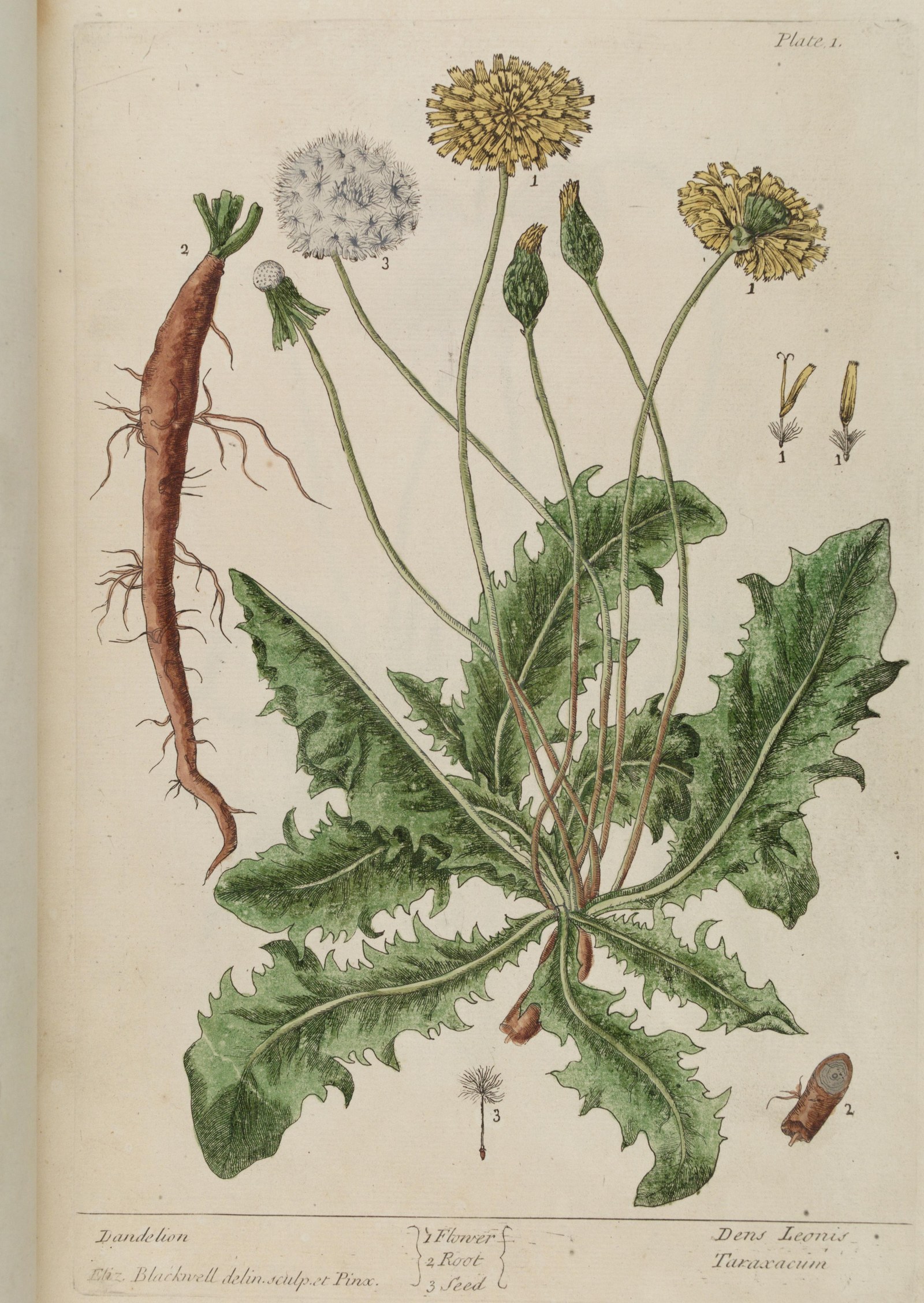
Plate 1 of A Curious Herbal: the dandelion, the commonest plant in England, drawn, engraved and coloured by Elizabeth Blackwell in 1737 to get her husband out of a debtors' prison.
- Published
- Plate 1, volume 1, 1737
- From
- A Curious Herbal
- Drawn by
- Elizabeth Blackwell
- Technique
- Hand-coloured copper engraving
- Family
- Asteraceae
- Native to
- Europe and Asia; now worldwide
About the plant
Elizabeth Blackwell's husband Alexander, a printer with no licence to print, was in a debtors' prison in 1735, and she set out to buy him out. She took lodgings beside the Chelsea Physic Garden, drew the plants it grew, engraved her own drawings on copper, coloured the prints by hand, and sold them in weekly parts of four for a shilling. Sir Hans Sloane and the physicians of London endorsed the project; the five hundred plates of A Curious Herbal, finished in 1739, paid the debt, and the book went through editions in London and Nuremberg for half a century. Alexander, released, went to Sweden, meddled in politics and was beheaded in 1747.
She began with the dandelion, plate 1, which says something about her good sense: the commonest plant in England, in every herbal since antiquity as a diuretic and a tonic for the liver, and in every kitchen as a spring salad and a coffee substitute. The lion's-tooth leaves gave it the French name dent-de-lion; the other French name, pissenlit, describes its effect. The yellow head is two hundred florets, each of which makes a seed on a parachute without needing to be pollinated at all, which is why there are more than two hundred microspecies in Britain and why no lawn is ever rid of it.
Bought together
More in the archive