Frederick Edward Hulme del. · Cassell & Company, London
Week of 22 April 2024
Dog rose
Part 3 of 6 in Wild flowers of the hedgerow
Rosa canina
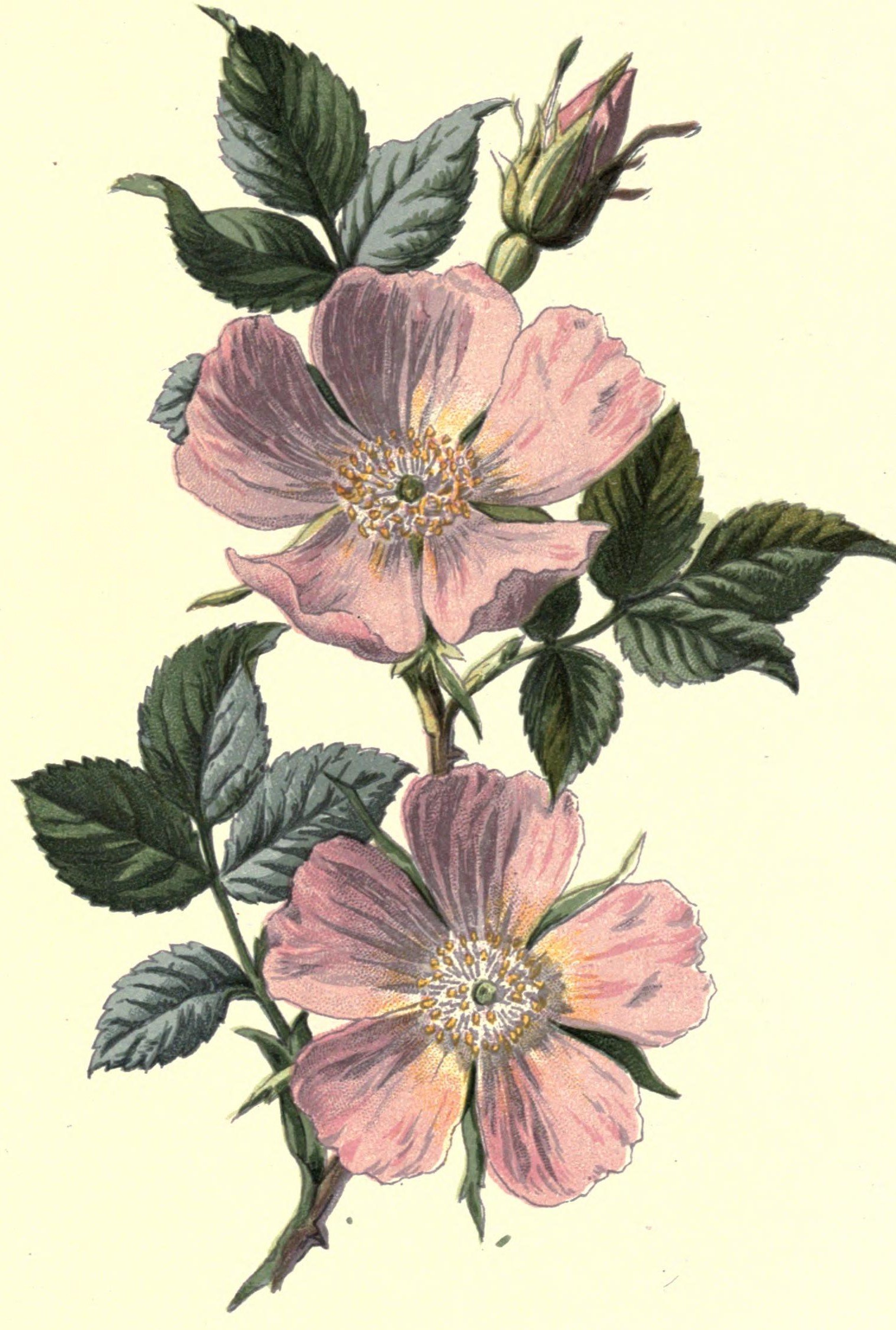
The dog rose of the June hedgerow, Britain's commonest wild rose and the rootstock of a thousand garden roses, from Hulme's Familiar Wild Flowers.
- Published
- volume 1, 1878
- From
- Familiar Wild Flowers
- Drawn by
- Frederick Edward Hulme
- Technique
- Chromolithograph
- Family
- Rosaceae
- Native to
- Britain, Europe and western Asia
About the plant
In June the English hedge turns to rose: arching stems set with hooked thorns, scrambling three metres into the hawthorn, and covered for a few weeks with single flowers of five petals, pale pink shading to white, with a boss of golden stamens. This is the dog rose, the commonest of our wild roses and the one Hulme chose to draw. Pliny recorded that the root cured the bite of a mad dog, which gave it the name canina, and the plant has been medicine, food and symbol ever since: the hips, scarlet in October, are one of the richest sources of vitamin C known, and when imports of citrus stopped in 1941 the Ministry of Health paid children threepence a pound to pick them for rose-hip syrup.
It is also the unseen parent of the garden rose. For centuries nurserymen budded their fancy varieties onto dog-rose stocks dug from the hedges, so that beneath every Victorian rose bed ran the roots of this hedgerow plant, and a neglected rose still reverts to it, sending up thorny suckers with pale single flowers. Hulme's plate, published in the first volume of Familiar Wild Flowers, shows the flower, a bud and the hips.
Bought together
More in the archive