Frederick Edward Hulme del. · Cassell & Company, London
Week of 15 April 2024
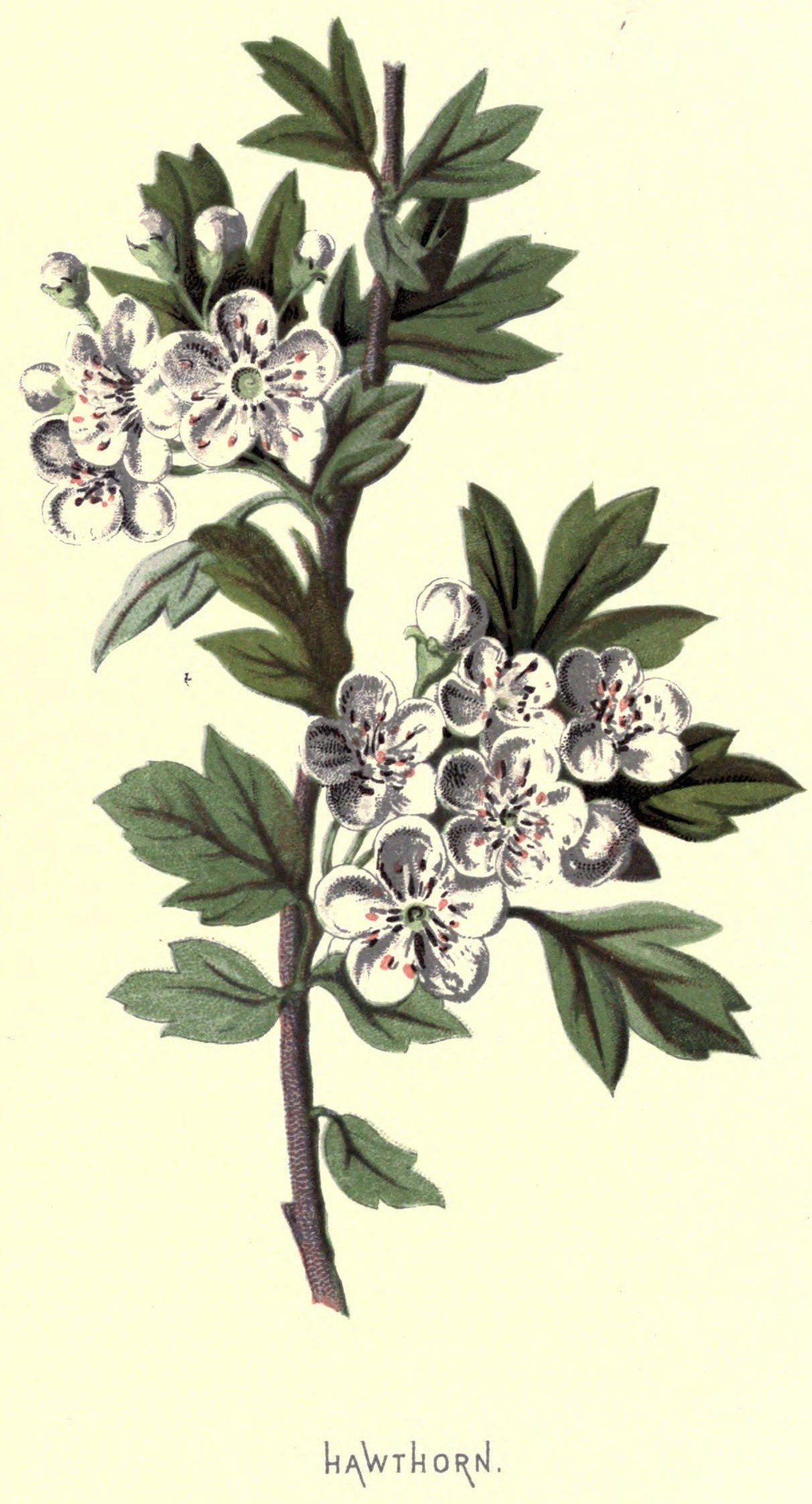
Hawthorn
Part 2 of 6 in Wild flowers of the hedgerow
Crataegus monogyna
The May tree: the hawthorn in blossom, the plant of two hundred thousand miles of English hedges, drawn with its flowers and its haws for Familiar Wild Flowers.
- Published
- volume 1, 1878
- From
- Familiar Wild Flowers
- Drawn by
- Frederick Edward Hulme
- Technique
- Chromolithograph
- Family
- Rosaceae
- Native to
- Britain, Europe and western Asia
About the plant
More than any other plant the hawthorn made the English landscape. Between 1750 and 1850 the Enclosure Acts divided the open fields and commons into the small hedged fields of the picture-book countryside, and the hedges, two hundred thousand miles of them, were planted with hawthorn, cheap, quick to grow and savagely thorned. Each May they foam with white blossom, the 'may' that the old rhyme tells you to see before shedding your winter clothes, and each autumn they redden with haws that keep the fieldfares and redwings alive until spring.
Country people never brought the blossom into the house: its sweetness has an undertone of trimethylamine, the chemical of decay, and it was a flower of the dead and of the fairies. Children ate the young leaves as bread-and-cheese, and the wood, hard as horn, made the cogs of mills. The name monogyna, 'one style', separates it from the rarer woodland hawthorn, which has two. Hulme drew it in flower and in fruit on one plate, a tree he could find within a mile of his school at Marlborough.
Bought together
More in the archive