Frederick Edward Hulme del. · Cassell & Company, London
Week of 13 May 2024
Corn poppy
Part 6 of 6 in Wild flowers of the hedgerow
Papaver rhoeas
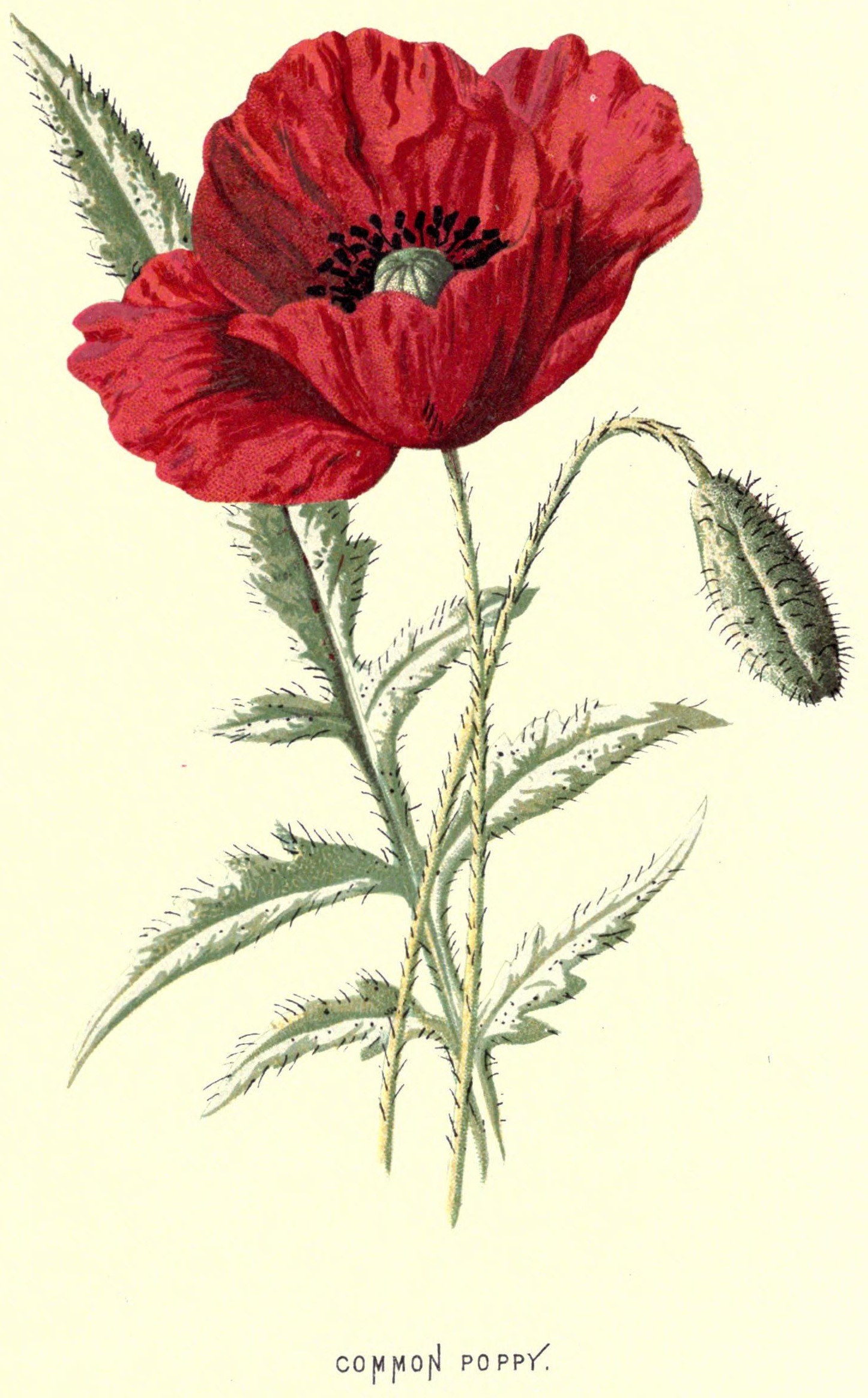
The scarlet poppy of the cornfield, the weed that followed the plough from the Near East to every field in Britain, drawn from life by F. E. Hulme for Familiar Wild Flowers.
- Published
- volume 1, 1878
- From
- Familiar Wild Flowers
- Drawn by
- Frederick Edward Hulme
- Technique
- Chromolithograph
- Family
- Papaveraceae
- Native to
- Europe, North Africa and western Asia; a cornfield weed since the first farmers
About the plant
The corn poppy is a weed of cultivation and probably always was: a plant of disturbed ground in the Near East that attached itself to the first wheat fields and travelled with them across Europe, so that by the time anyone wrote about it the red of the poppies was as much a part of a cornfield as the gold of the corn. Its seed can lie buried for half a century and still germinate when the plough brings it to the light, which is why a field that has not seen a poppy for years can turn scarlet after it is dug. The flower itself lasts a single day; the plant has no need of it to last longer.
Hulme drew it with its buds nodding on hairy stalks, the crumpled petals opening and the pepper-pot capsules that shed the seed, in the first series of Familiar Wild Flowers in 1878, forty years before the poppy acquired its other meaning. In 1915 the shelling of Flanders turned up the buried seed across the whole front, and the poppies that came up in their millions between the graves gave John McCrae his poem and the world its flower of remembrance.