Frederick Edward Hulme del. · Cassell & Company, London
Week of 29 April 2024
Harebell
Part 4 of 6 in Wild flowers of the hedgerow
Campanula rotundifolia
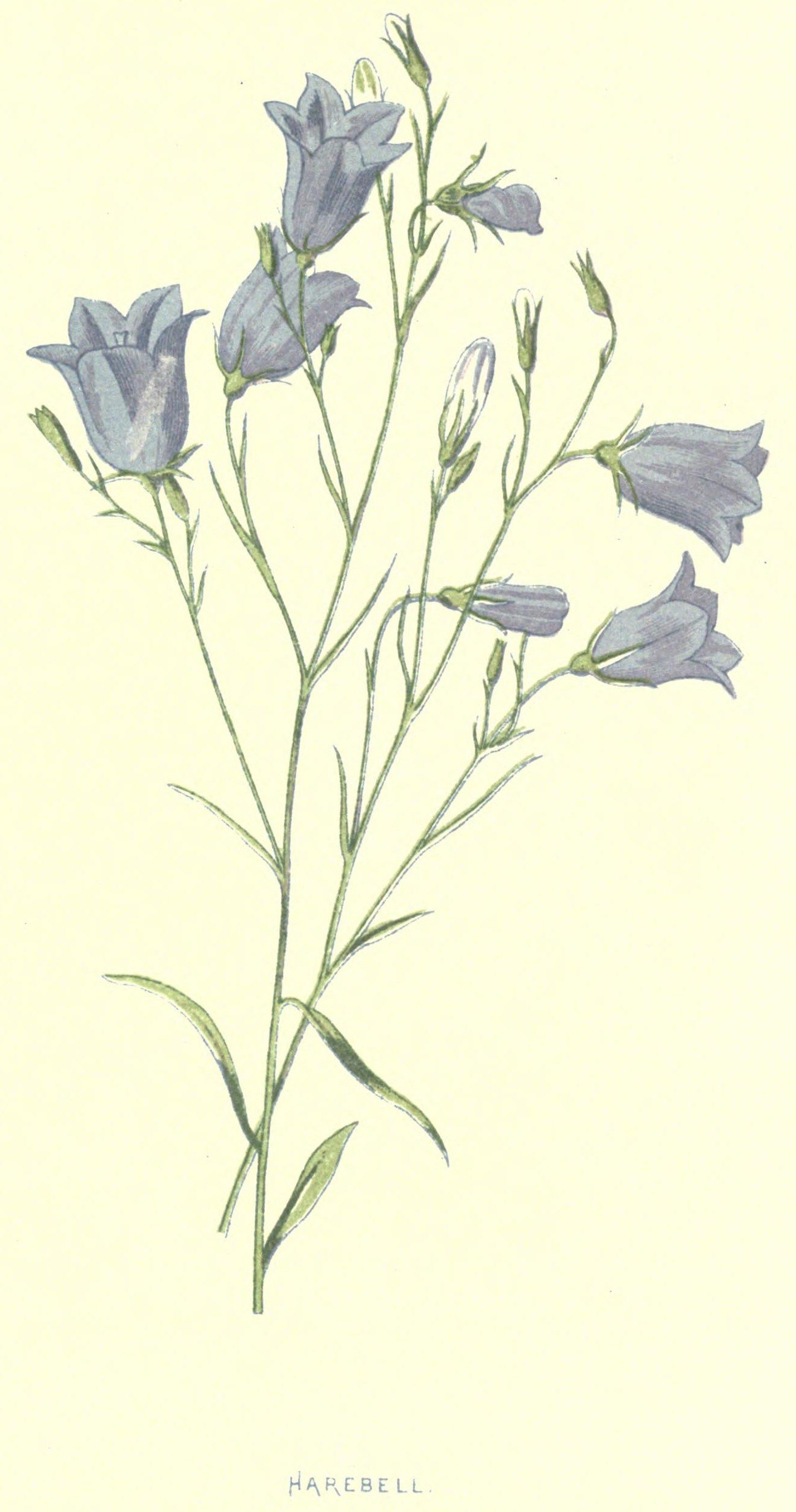
The harebell, the bluebell of Scotland, nodding on wiry stems over dry turf from July to September, drawn by Hulme for Familiar Wild Flowers.
- Published
- volume 1, 1878
- From
- Familiar Wild Flowers
- Drawn by
- Frederick Edward Hulme
- Technique
- Chromolithograph
- Family
- Campanulaceae
- Native to
- Britain, Europe, Asia and North America
About the plant
The harebell is the toughest and most delicate of the British wild flowers: a plant of thin dry turf, sand dunes, limestone and old stone walls, with stems like wire that the wind cannot break and flowers like blue paper bells that nod and shiver in it from midsummer to the first frosts. The round leaves of the name grow at the base in spring and are gone by the time the plant flowers, which has puzzled generations of beginners holding the key to a flora. Bees crawl up into the hanging bells, and the nodding keeps the rain off the pollen.
In Scotland it is simply the bluebell, which is why Scottish and English gardeners have been talking past each other for centuries, the English bluebell being the hyacinth of the spring woods. Its range is enormous: the same species grows across Europe and Asia and over most of North America, where it is the bluebell bellflower. Folk names, harebell among them, link it with hares and with witches, who were said to take its form. Hulme drew it with its seed capsules, which open by pores at the base so the seed shakes out like pepper.
Bought together
More in the archive