Joseph Dalton Hooker del. · Walter Hood Fitch lith. · Reeve, Benham & Reeve, London
Week of 23 March 2026
Silver rhododendron
Part 3 of 7 in Rhododendrons and magnolias of the Himalaya
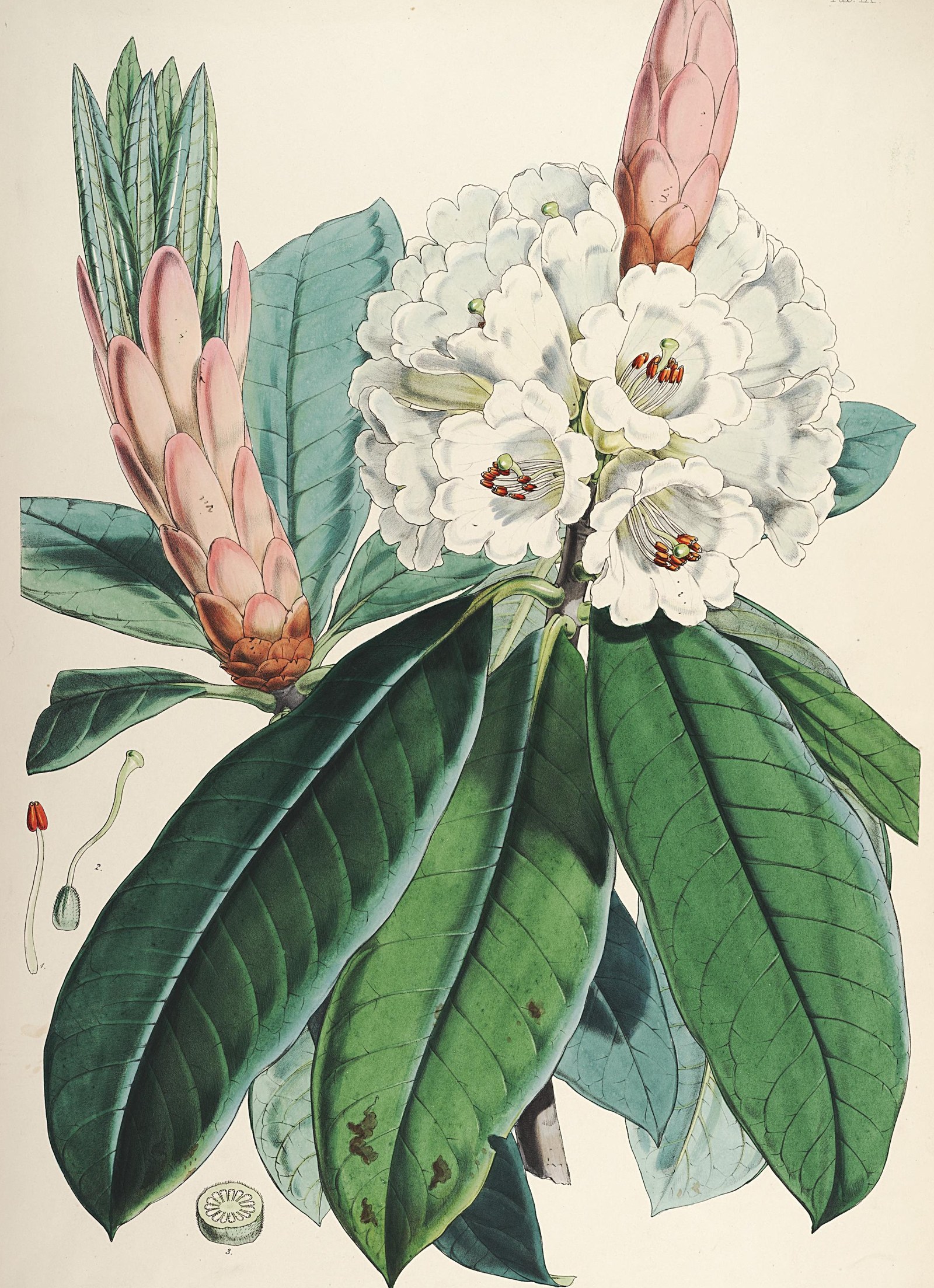
Rhododendron grande (published as Rhododendron argenteum)
Hooker's 'noblest of the species': a rhododendron tree of Sikkim with leaves a foot long, silver beneath, and trusses of two dozen creamy flowers, from the Rhododendrons of Sikkim-Himalaya.
- Published
- Plate IX, 1849
- From
- The Rhododendrons of Sikkim-Himalaya
- Drawn by
- Joseph Dalton Hooker
- Lithograph
- Walter Hood Fitch
- Technique
- Hand-coloured lithograph
- Family
- Ericaceae
- Native to
- Sikkim, Bhutan and Arunachal Pradesh
About the plant
Hooker met this rhododendron as a forest tree, thirty or forty feet high, its trunk as thick as a man, its leaves a foot long and shining silver underneath when the wind turned them, and in April its crown set with trusses of twenty cream-coloured bells each the size of a wine glass. He named it argenteum, silver, called it in his text the noblest of all the Sikkim species, and had Fitch draw a single truss and leaf life-size for the plate, since nothing smaller would do. Seed went home to Kew in 1849, and within a decade plants were growing in the few British gardens mild and wet enough for them.
The name did not last. Robert Wight, the Madras botanist, had already published a specimen from Bhutan in 1847 as Rhododendron grande, and by the rules of priority his name stands; but Hooker's plate, in the book issued from Kew by his father while he was still in the field, is the one by which the plant became known. It is still a tree for the west: Caerhays and Trewithen in Cornwall, and the gardens of Argyll and Kerry, where century-old specimens flower in March.
Bought together
More in the archive