Frederick Edward Hulme del. · Cassell & Company, London
Week of 8 April 2024
Primrose
Part 1 of 6 in Wild flowers of the hedgerow
Primula vulgaris
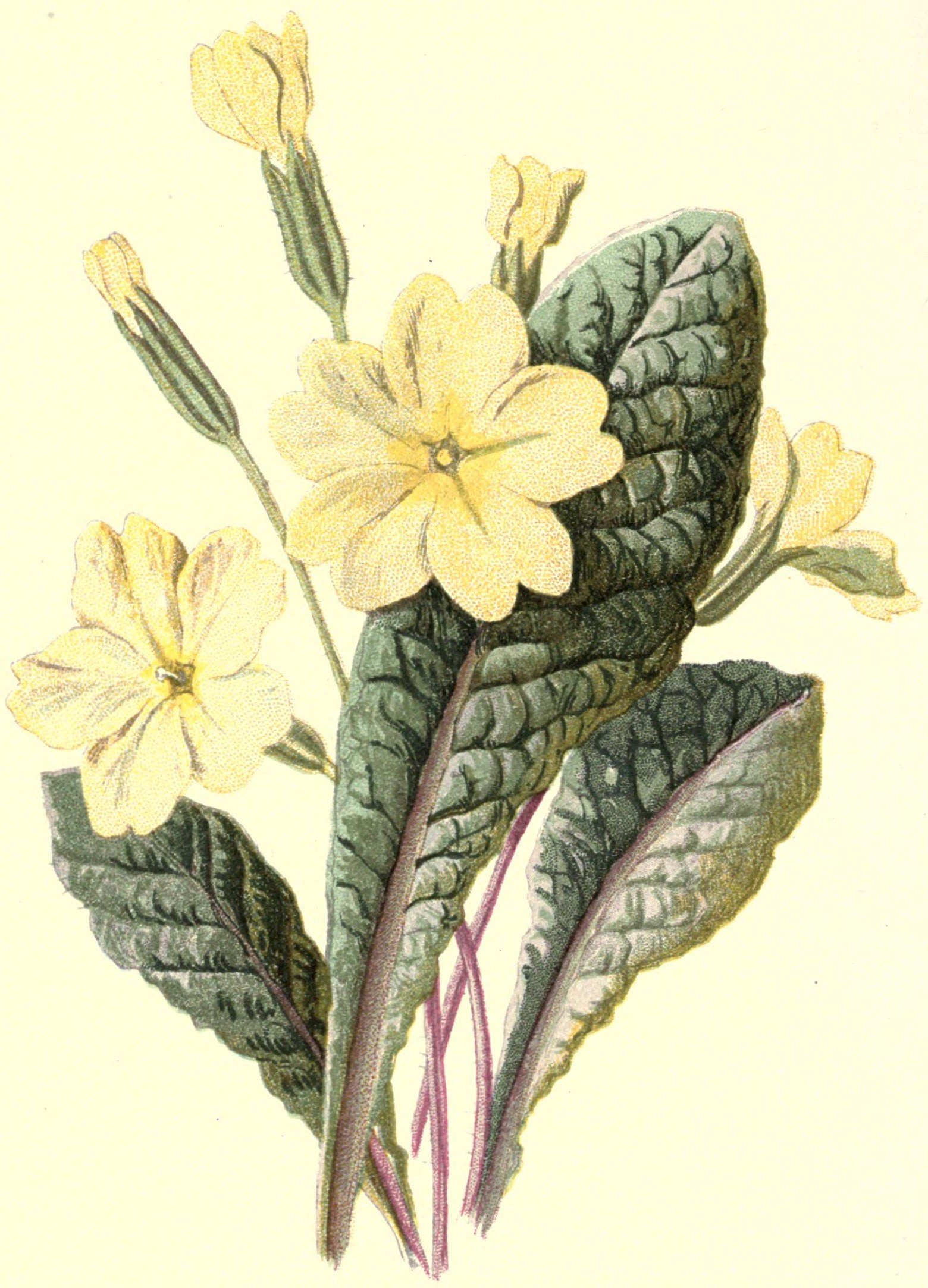
The primrose of the hedge bank, 'first rose' of the English spring, as F. E. Hulme drew it from life for the book that taught Victorian walkers the names of their wild flowers.
- Published
- volume 1, 1878
- From
- Familiar Wild Flowers
- Drawn by
- Frederick Edward Hulme
- Technique
- Chromolithograph
- Family
- Primulaceae
- Native to
- Britain, Ireland and western Europe
About the plant
The primrose opens on hedge banks and in coppiced woods in March, before the trees come into leaf, a rosette of crinkled leaves and a cluster of soft yellow flowers each with a deeper eye, and it has been the sign of spring in England for as long as anyone has written about it. Its name is the medieval prima rosa, the first rose. It was the flower children picked by the basketful for the London flower markets in the nineteenth century, and the flower that Queen Victoria sent to Disraeli's funeral in 1881, which gave the Conservative Party its Primrose League and the nation a Primrose Day each April for half a century.
Look into the flowers and they are of two kinds: in some the round stigma sits at the mouth like a pin-head, in others a ring of stamens does and the stigma is hidden below. Charles Darwin studied primroses from his garden at Down in 1862 and showed that the two forms exist to make the flower cross with another plant rather than itself. F. E. Hulme, the art master at Marlborough College who drew Familiar Wild Flowers from living plants, gave the primrose one of the first plates in the book.
Bought together
More in the archive