Désiré Bois del. · Frederick Warne & Co., London
Week of 1 July 2024
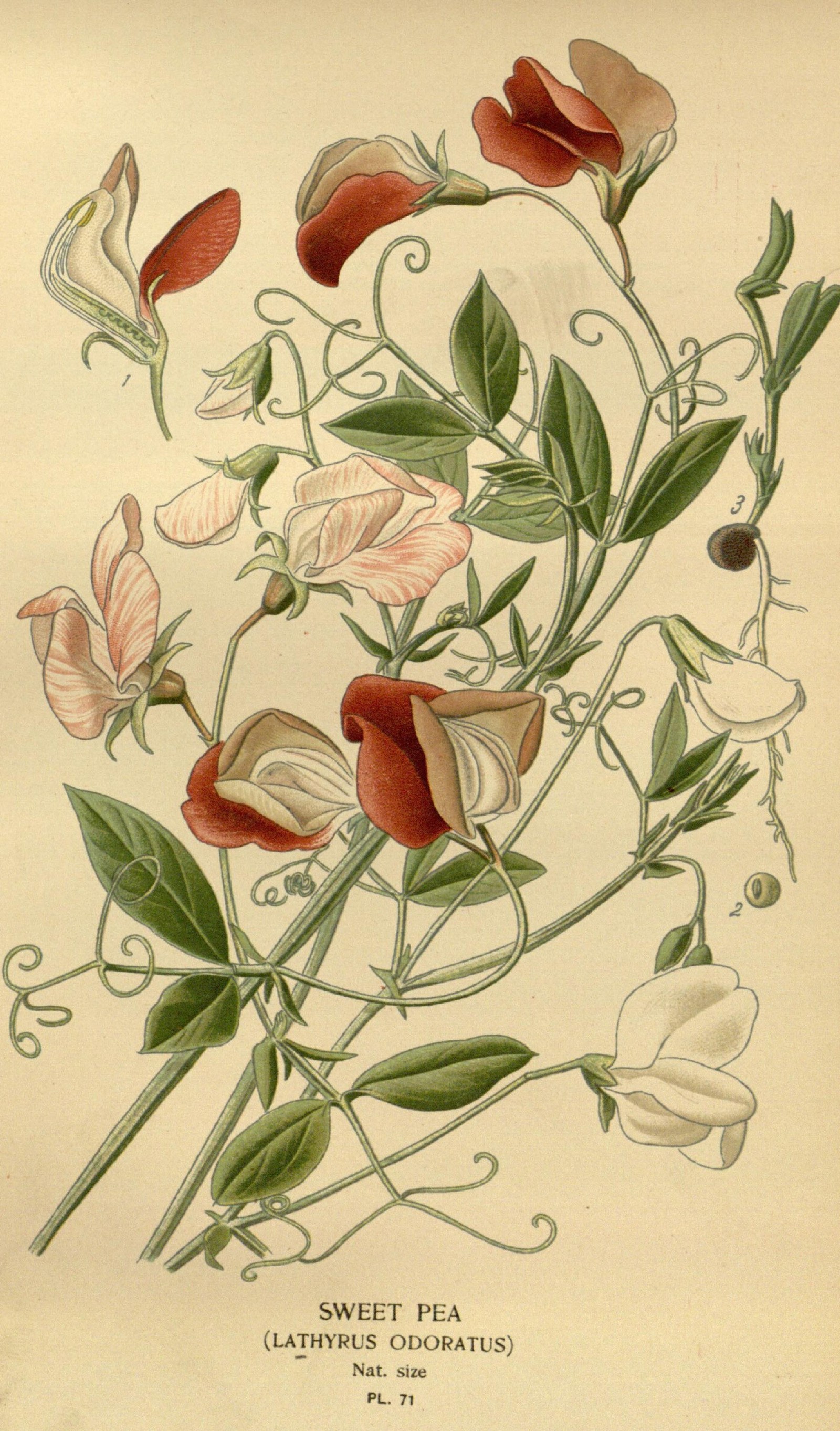
Sweet pea
Part 1 of 6 in Flowers of the cottage garden
Lathyrus odoratus
The sweet pea of the cottage garden, a Sicilian wild flower that a monk posted to an Enfield schoolmaster in 1699, drawn for Edward Step's Favourite Flowers at the height of its Victorian fashion.
- Published
- Plate 71, volume 1, 1896
- From
- Favourite Flowers of Garden and Greenhouse
- Drawn by
- Désiré Bois
- Technique
- Chromolithograph
- Family
- Fabaceae
- Native to
- Sicily and southern Italy
About the plant
The sweet pea began as a weed of the Sicilian hillsides: a scrambling annual with small flowers of purple and maroon and a scent out of all proportion to its size. In 1699 a monk at Palermo, Francesco Cupani, put seed in a letter to Dr Robert Uvedale, who kept a school at Enfield and a famous garden, and from Enfield it spread through England. For nearly two centuries it stayed small and wild, grown for its perfume, until a Shropshire nurseryman, Henry Eckford, spent the 1880s crossing and selecting it into the big-flowered Grandiflora sweet peas in a dozen colours. The plate in Favourite Flowers, published in 1896, shows Eckford's sweet pea at the peak of its fame; five years later the frilled Spencer type appeared at Althorp and the Edwardians went mad for it.
Edward Step's four volumes were the garden book of the 1890s, 316 chromolithographs by the French botanical artist Désiré Bois of the plants an ordinary gardener actually grew, with sensible notes on how to grow them. They were printed in colour and sold in parts, and their plates have been cut out and framed ever since.
Bought together
More in the archive