Louis van Houtte's artists del. · Louis van Houtte, Ghent
Week of 13 July 2026
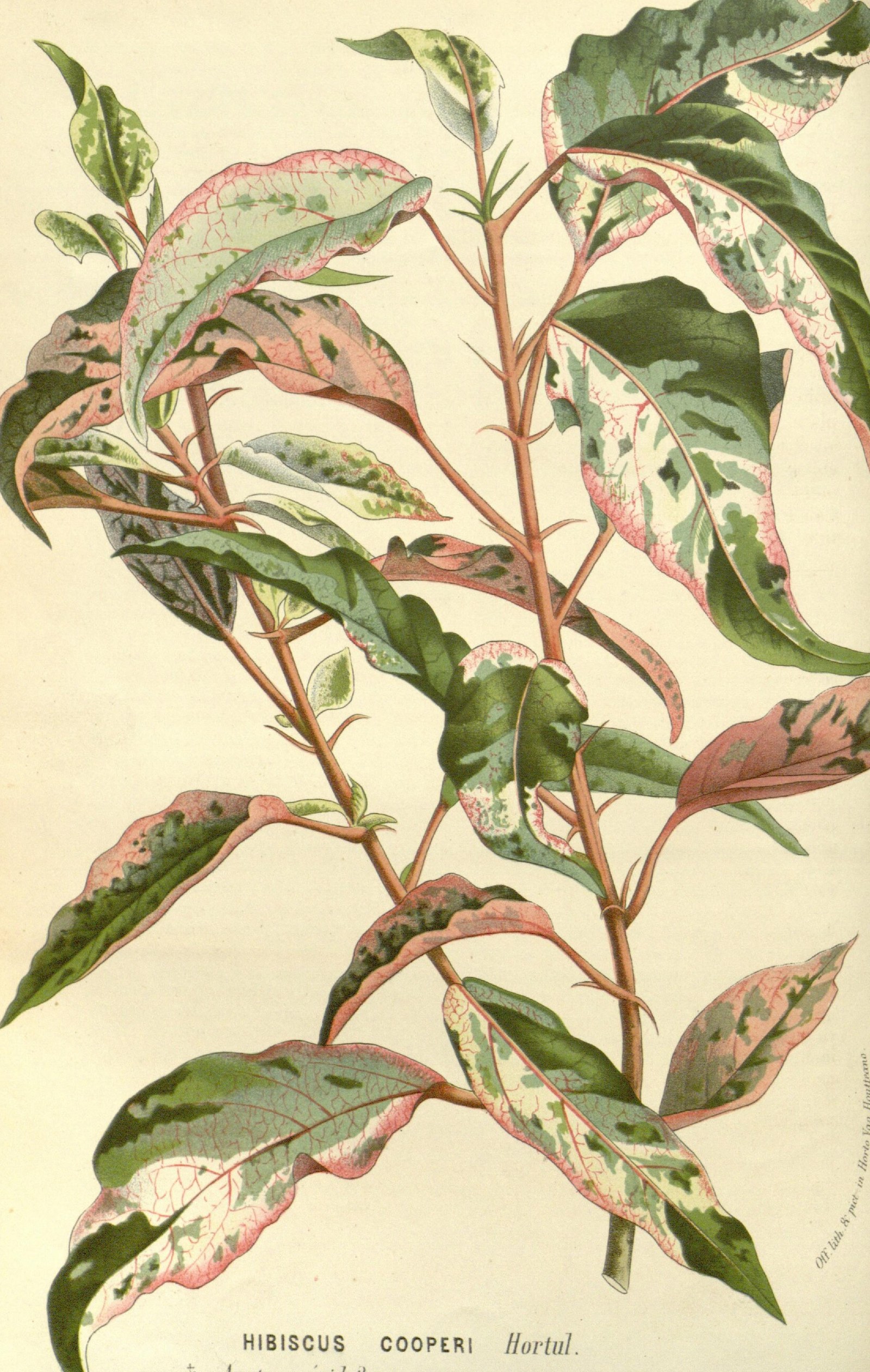
Cooper's hibiscus
Part 6 of 6 in Van Houtte's Flore des serres
Hibiscus rosa-sinensis 'Cooperi' (published as Hibiscus cooperi)
A hibiscus grown for its leaves, splashed with cream, pink and crimson, brought from the New Hebrides in 1861 and lithographed at Ghent for the Flore des serres.
- Published
- Plate 1556, volume 15, 1863
- From
- Flore des serres et des jardins de l'Europe
- Drawn by
- Louis van Houtte's artists
- Technique
- Hand-coloured lithograph
- Family
- Malvaceae
- Native to
- A variegated form of the Chinese hibiscus, from the islands of the Pacific
About the plant
The Victorians discovered in the 1860s that a plant could be grown for its leaves alone, and the hunt for variegated and coloured foliage for the stove house began. John Gould Veitch, on his Pacific voyage of 1860–61, sent home from the New Hebrides the crotons that became the rage of the decade, and with them this hibiscus, a form of the Chinese shoe flower in which every leaf is marbled with cream, pink and crimson as if it had been dipped in paint. Veitch's named it for Daniel Cooper, one of their men, and it went round Europe within two years.
Van Houtte's lithographers at Ghent drew it for the Flore des serres in 1863 with the care usually given to a flower, the leaves at natural size and every blotch in place. The flowers are small and scarlet and rarely shown; the plant was and is grown for its leaves, which colour best in full sun, and it remains a common hedge and pot plant across the tropics, still under Cooper's name, a century and a half after it left Veitch's hands.
Bought together
More in the archive