Matilda Smith del. · John Nugent Fitch lith. · Vincent Brooks, Day & Son Ltd · L. Reeve & Co., London
Week of 15 September 2025
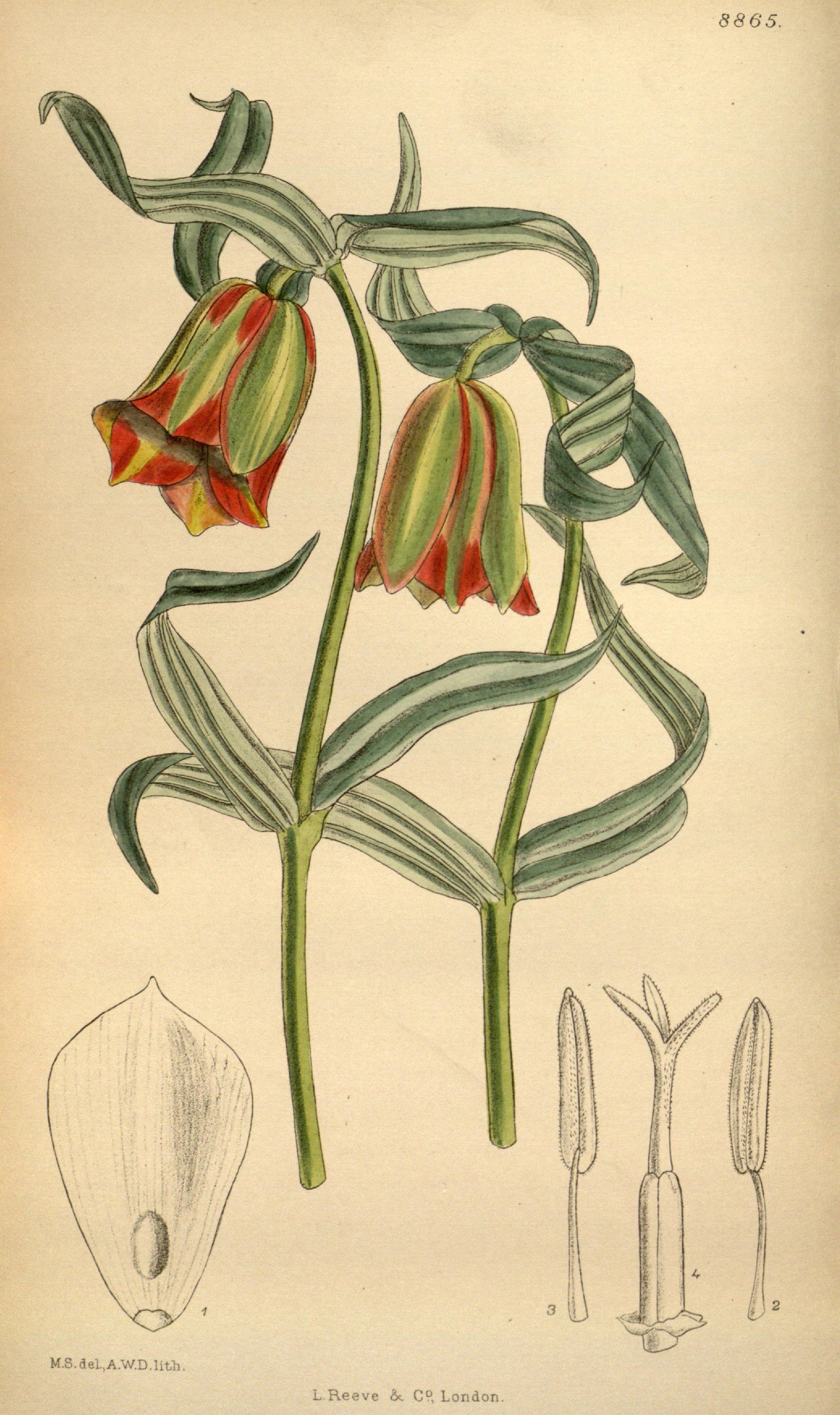
Pontic fritillary
Part 6 of 6 in Bulbs and irises
Fritillaria pontica
A woodland bulb from the Balkans and the Black Sea coast of Turkey, with green bells flushed bronze beneath a collar of three leaves.
- Published
- Plate 8865, volume 146, 1920
- From
- Curtis's Botanical Magazine
- Drawn by
- Matilda Smith
- Lithograph
- John Nugent Fitch
- Technique
- Hand-coloured lithograph
- Family
- Liliaceae
- Native to
- The Balkans and north-western Turkey
About the plant
Fritillaries can be fussy bulbs, wanting the baked summers of Turkish hillsides, but Fritillaria pontica is the exception: a woodland plant from the Balkans and the Black Sea coast that is happy in the leafy shade of an English shrubbery. In April each stem carries one to three nodding bells of soft green, their edges washed with bronze, and above them a whorl of three leaves spreads like a ruff. The effect is quiet, almost camouflaged, and gardeners who like green flowers prize it.
The genus takes its name from the Latin for a dice-box, because the first species known to European gardens, the snake's-head fritillary of water meadows, has petals chequered like a gaming board. The Pontic species is plain by comparison but easier to keep: its bulb of two fleshy scales dislikes being dried out, and the plant spreads slowly into colonies if left undisturbed. Bumblebees are its pollinators, climbing right up into the bell.
The plate was drawn by Matilda Smith in 1920 from bulbs grown at Kew, where the species had been in the rock garden since the 1880s.
Bought together
More in the archive
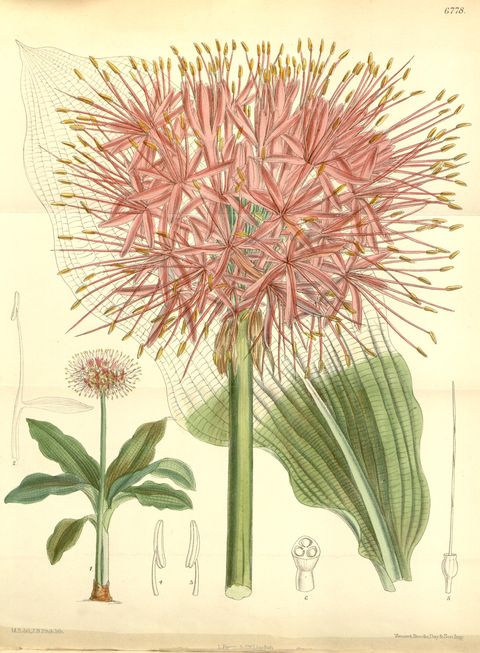
Week of 18 August 2025 · Plate 6778
Katherine-wheel lily
Scadoxus multiflorus subsp. katherinae
From £10
Buy