Matilda Smith del. · John Nugent Fitch lith. · Vincent Brooks, Day & Son Ltd · L. Reeve & Co., London
Week of 24 November 2025
Tree cholla
Part 4 of 6 in Desert plants and living fossils
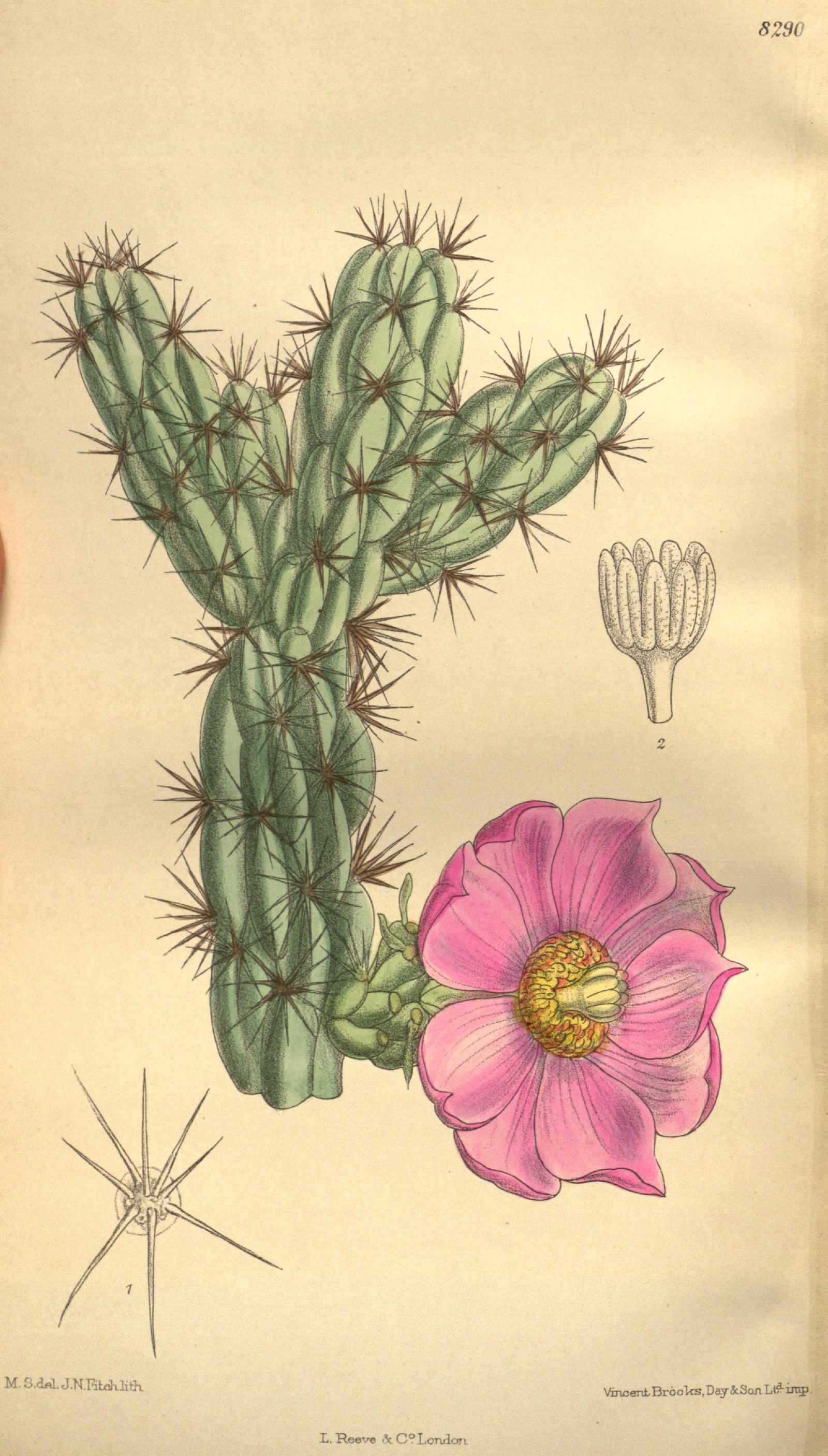
Cylindropuntia imbricata (published as Opuntia imbricata)
A tree-sized cactus of the high desert, built of jointed, knobbly cylinders, with magenta flowers in summer and yellow fruits that hang on all winter.
- Published
- Plate 8290, volume 135, 1909
- From
- Curtis's Botanical Magazine
- Drawn by
- Matilda Smith
- Lithograph
- John Nugent Fitch
- Technique
- Hand-coloured lithograph
- Family
- Cactaceae
- Native to
- South-western United States and northern Mexico
About the plant
The tree cholla is the cactus of the high plains, growing on the grasslands and mesas of New Mexico, Texas and Colorado where winters bring snow. It builds a small tree three metres high out of jointed cylinders, each one studded with raised, overlapping tubercles (the 'imbricata' of the name, meaning tiled) and bristling with spines in papery white sheaths. The joints snap off at a touch and root where they fall, which is how the plant spreads across overgrazed range, to the fury of ranchers.
In early summer the ends of the branches open magenta flowers the size of a rose, and these become knobbly yellow fruits that hang on through the winter, when deer and pronghorn eat them. When a cholla dies its stems rot to a hollow wooden lattice, light and strong, that has been turned into walking sticks, lamp stands and furniture for generations.
It is the hardiest of all the chollas, and the plant Matilda Smith drew in 1909 had been growing outdoors at Kew. Botanists have since moved the chollas out of Opuntia into their own genus, Cylindropuntia.
Bought together
More in the archive