Louis van Houtte's artists del. · Louis van Houtte, Ghent
Week of 15 June 2026
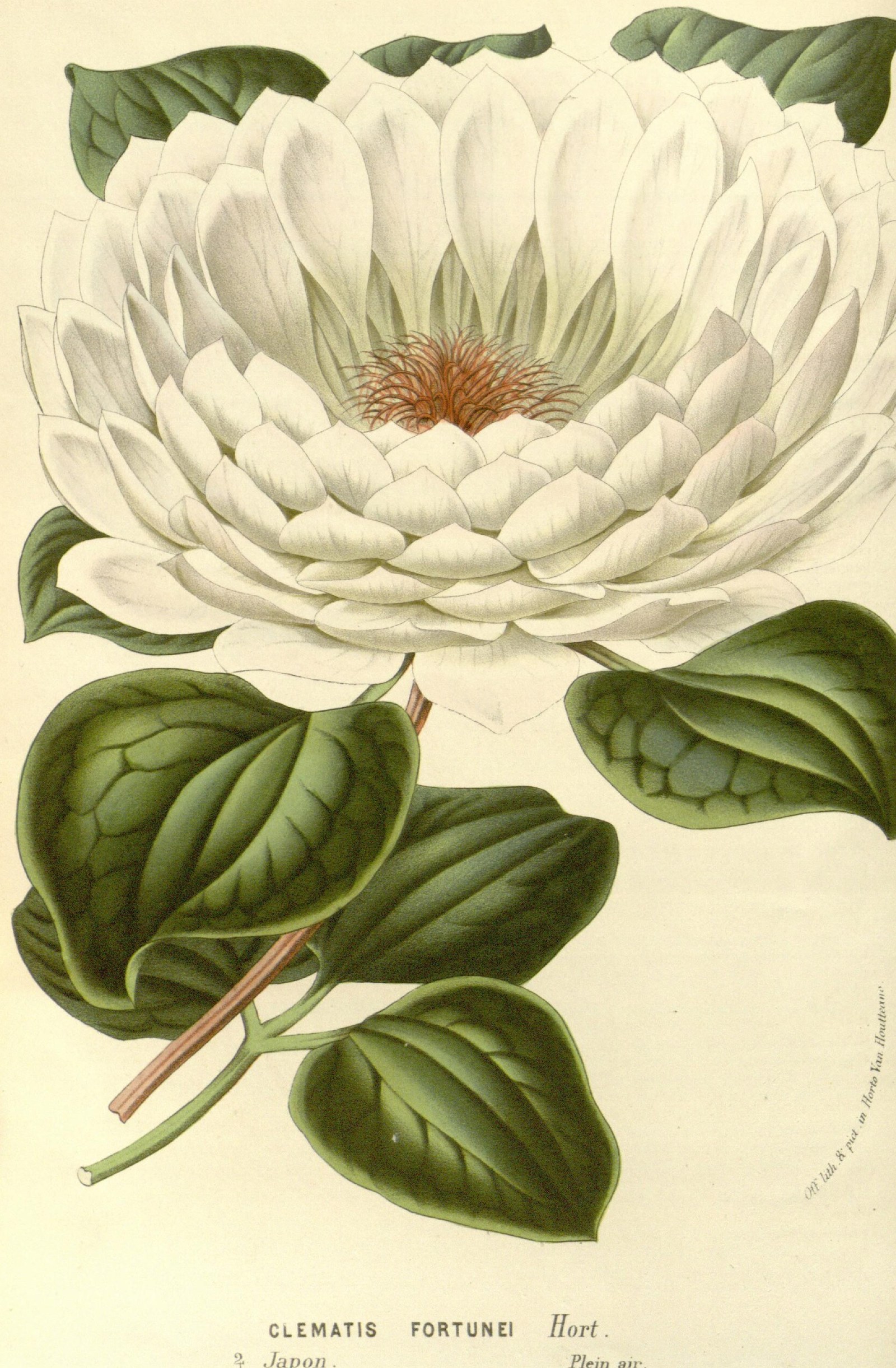
Fortune's clematis
Part 2 of 6 in Van Houtte's Flore des serres
Clematis fortunei (published as Clematis patens 'Fortunei')
A double white clematis from the gardens of Japan, scented of hawthorn, figured in the Flore des serres in the year Robert Fortune sent it to Europe.
- Published
- Plate 1555, volume 15, 1863
- From
- Flore des serres et des jardins de l'Europe
- Drawn by
- Louis van Houtte's artists
- Technique
- Hand-coloured lithograph
- Family
- Ranunculaceae
- Native to
- Japanese gardens; sent to England by Robert Fortune in 1863
About the plant
Robert Fortune, the Scottish collector who had smuggled tea plants out of China for the East India Company, made his last journeys to Japan in the early 1860s, when the country had only just opened to foreigners, and sent home from its nursery gardens plants that the Japanese had been improving for centuries: chrysanthemums, the male aucuba, the saxifrage with the strawberry runners, and this clematis. It flowered in England in 1863, a big double white, scented of hawthorn, the sepals opening flat in tiers, and Thomas Moore named it Clematis fortunei in the Gardeners' Chronicle. Van Houtte had it drawn for the Flore des serres the same year.
It is now thought to be an old Japanese garden form of Clematis patens, the species that gave the large-flowered clematis their size, and it was quickly put to work: crossed with the lavender Clematis lanuginosa it produced 'Belle of Woking' and 'Duchess of Edinburgh', and through them every double white clematis in a garden centre carries its blood. Like all the early large-flowered clematis it blooms on wood made the year before, so the gardener who cuts it to the ground in spring loses the flowers.
Bought together
More in the archive