Walter Hood Fitch del. et lith. · Lovell Reeve, London
Week of 27 July 2026
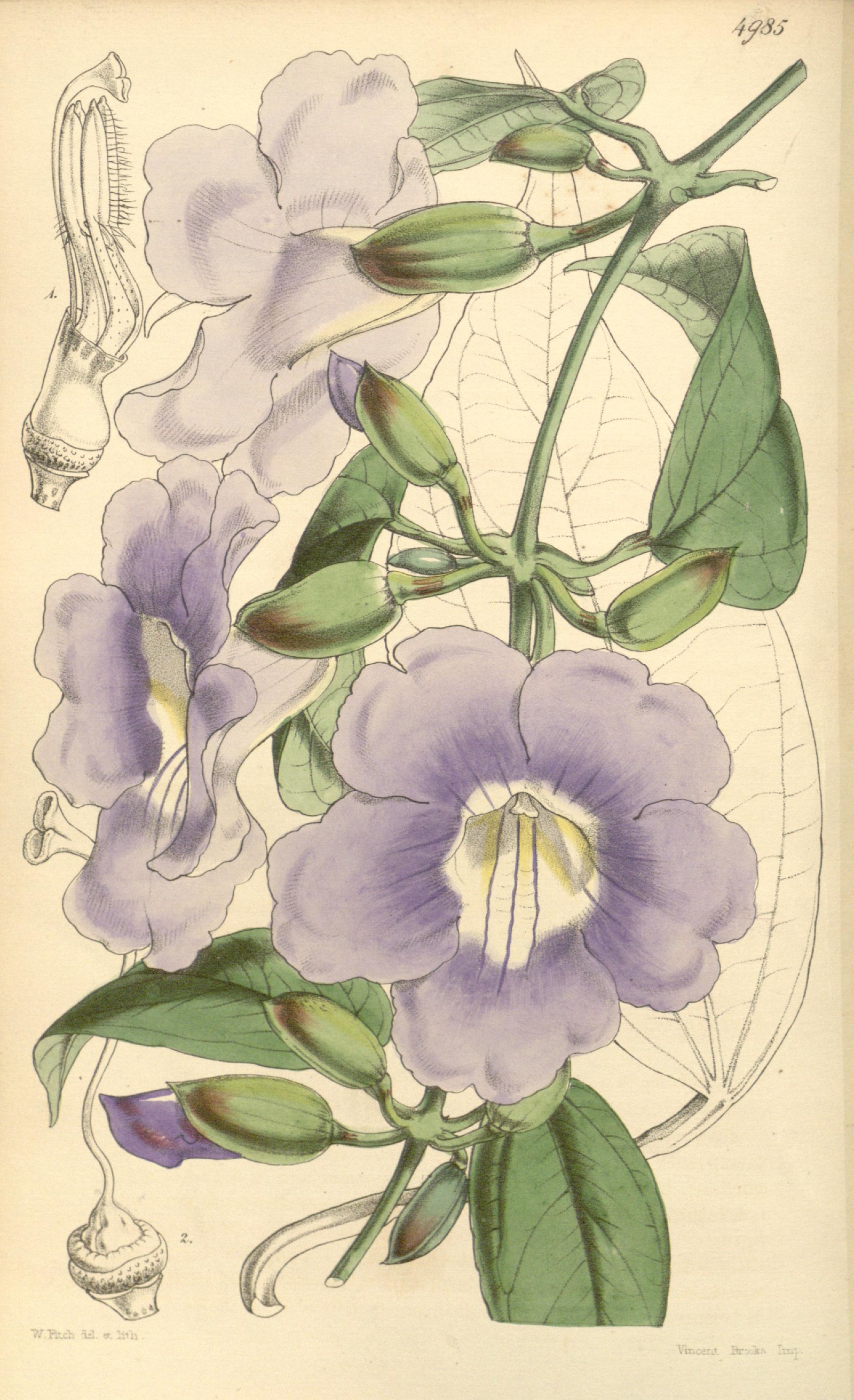
Blue trumpet vine
Part 2 of 6 in Climbers and useful plants
Thunbergia laurifolia
A twining vine of the Indo-Malayan forests with laurel leaves and lavender-blue trumpets, drunk as a tea in Thailand and grown in Victorian stove houses.
- Published
- Plate 4985, volume 83, 1857
- From
- Curtis's Botanical Magazine
- Drawn by
- Walter Hood Fitch
- Lithograph
- Walter Hood Fitch
- Technique
- Hand-coloured lithograph
- Family
- Acanthaceae
- Native to
- India, Myanmar, Thailand and Malaysia
About the plant
In its own forests, from India to Malaysia, the blue trumpet vine is a giant, twining up to the canopy and hanging its chains of lavender-blue, yellow-throated trumpets from the branches almost all year round. The glossy, laurel-like leaves give it its name. In Thailand those leaves are dried and brewed as rang jued, a bitter green tea that is taken for hangovers, fevers and any poison the drinker fears, and the plant is grown in village gardens for the purpose.
It was named for Carl Peter Thunberg, the Swedish pupil of Linnaeus who spent a year in Japan in 1775 as the only European botanist allowed ashore, after three years at the Cape. Victorian growers prized the vine for their stove houses, where it could be trained along the rafters and would flower in winter; Walter Hood Fitch drew it at Kew for this plate in 1857.
Set loose in the wrong climate it is a menace: in Queensland and Hawaii it blankets trees along forest edges, roots from any fallen stem, and has been declared a noxious weed.
Bought together
More in the archive