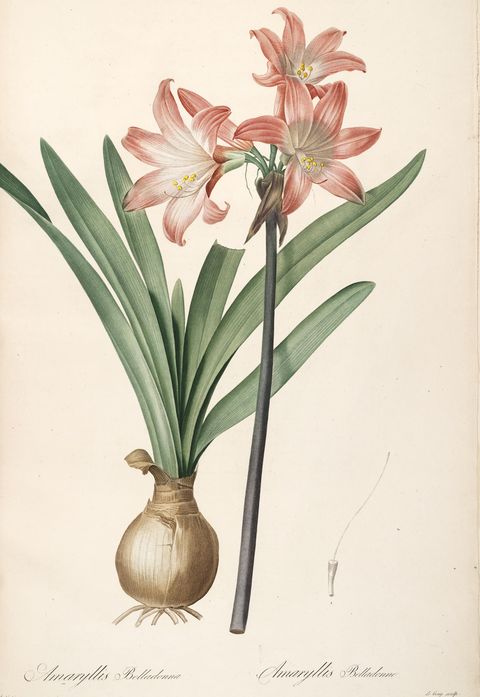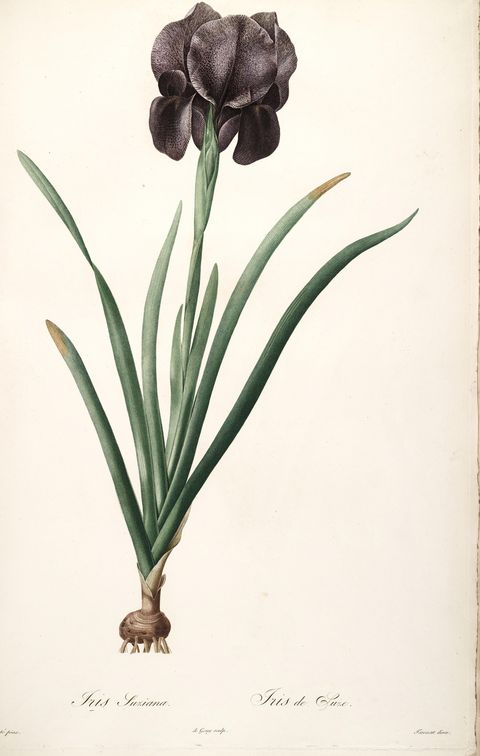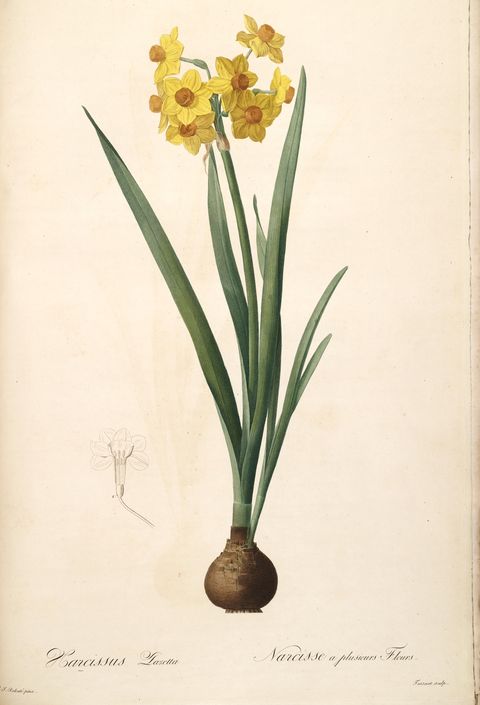
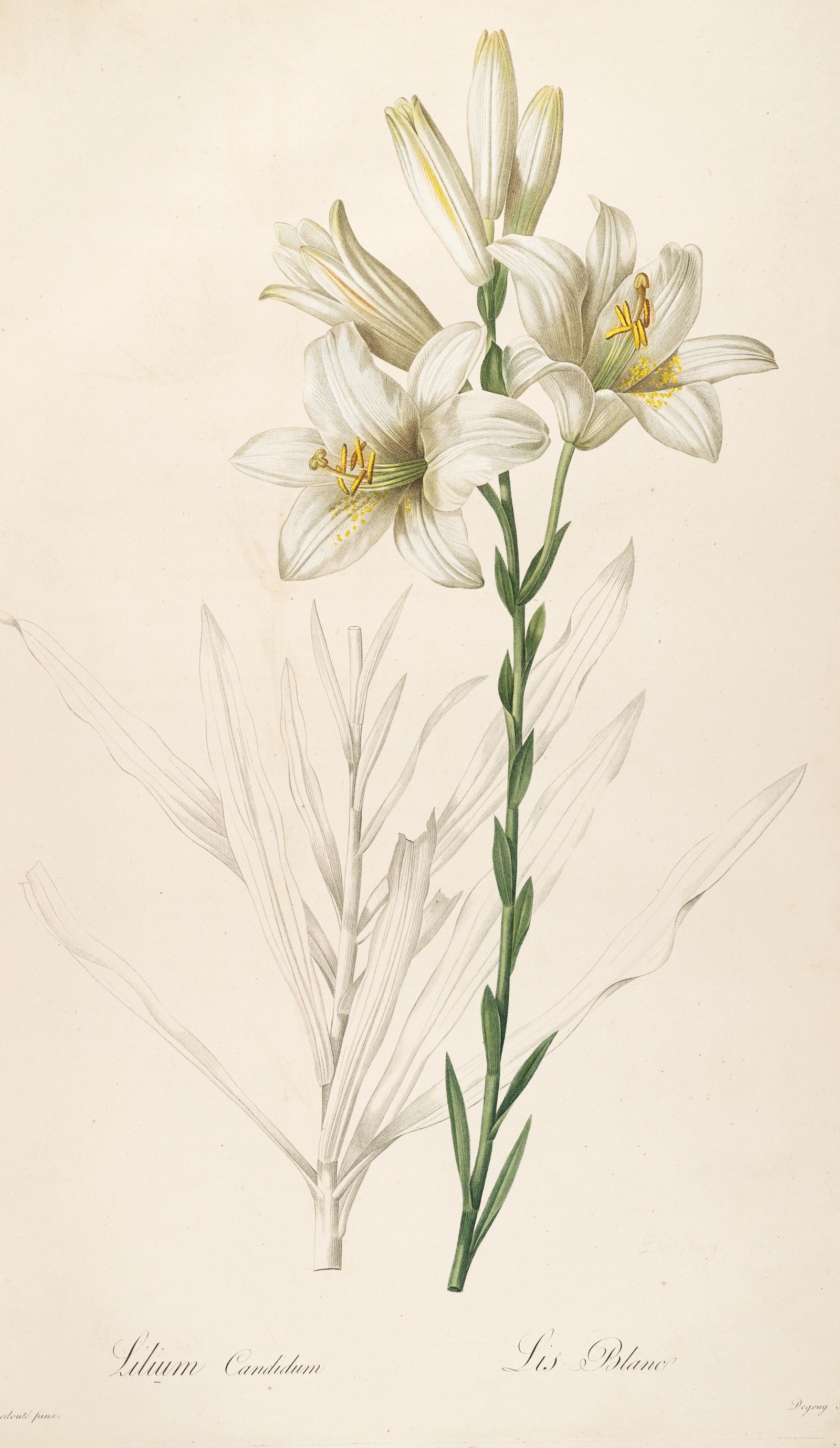
Pierre-Joseph Redouté del. · de Gouy sculp. · Didot jeune, Paris
Week of 16 June 2025
Madonna lily
Part 5 of 6 in Redouté's lilies
Lilium candidum
The oldest cultivated lily, painted on frescoes at Knossos and carried by the Romans across Europe, as Redouté painted it for Les Liliacées, the grandest of his books.
- Published
- volume 4, 1808
- From
- Les Liliacées
- Drawn by
- Pierre-Joseph Redouté
- Engraved by
- de Gouy
- Technique
- Colour-printed stipple engraving, finished by hand
- Family
- Liliaceae
- Native to
- The Balkans and the eastern Mediterranean, from Greece and Turkey to Lebanon
About the plant
Les Liliacées was the biggest thing Redouté ever did: 486 plates in eight folio volumes, published in eighty parts between 1802 and 1816, of lilies and everything then thought to be related to them, irises, tulips, amaryllids, orchids and bromeliads included. The Empress Josephine put up the money and bought the original paintings on vellum, and the text was written at first by the young Augustin Pyramus de Candolle, who would become the greatest botanist of his age. The plates were stipple-engraved and printed in colour, the technique Redouté had perfected, and they made him famous across Europe.
The Madonna lily is the lily of history. It grows wild in the Balkans and the eastern Mediterranean, and people have grown it for longer than any other: it is on the frescoes of Knossos, painted around 1600 BC, and on the reliefs of Assyrian kings. The Romans took it everywhere their legions went, for its scent and for a salve of its bulb for burns, and it survived the Dark Ages in monastery gardens, from which it became the lily of the Annunciation in a thousand paintings of the Virgin. Redouté painted the pure white trumpets with their gold stamens against a stem of narrow leaves. It is an odd lily to grow: it sends up a rosette of leaves in autumn that lasts the winter, and it wants its bulb barely covered.
Bought together
More in the archive