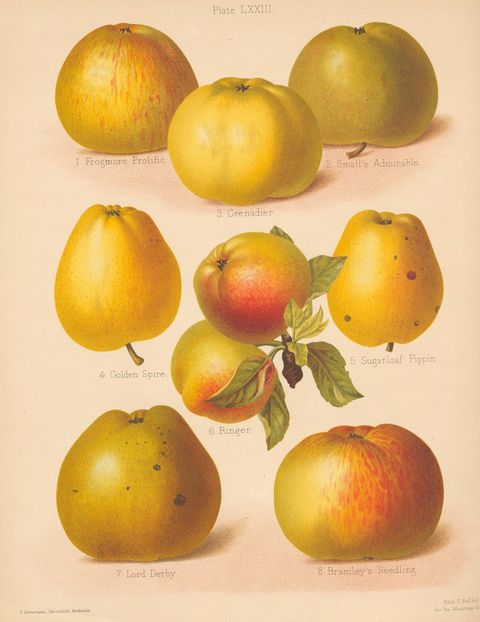
Week of 21 October 2024 · Plate LXXIII
Bramley's Seedling
Malus domestica 'Bramley's Seedling'
From £10
Buy
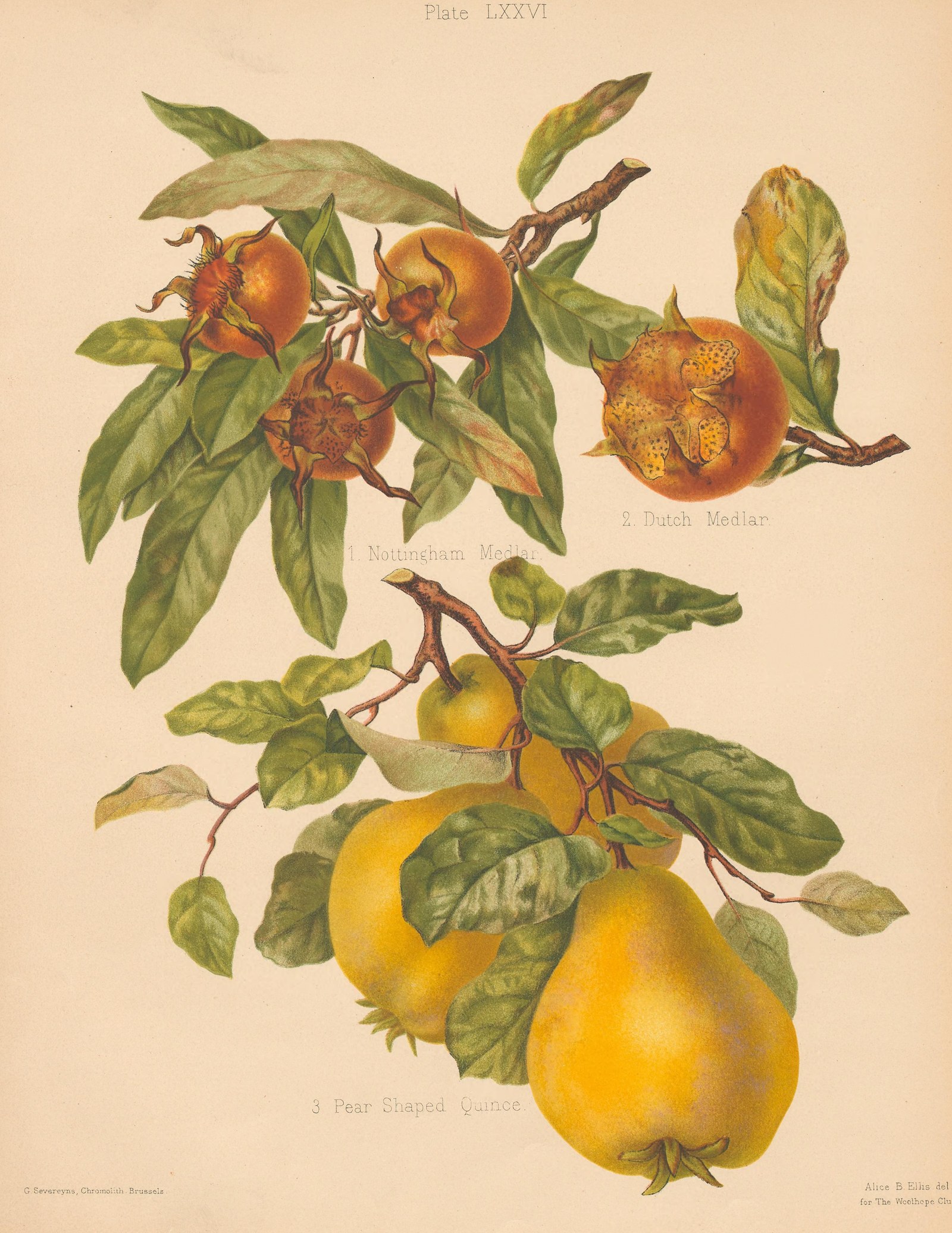
Alice B. Ellis and Edith E. Bull del. · G. Severeyns, Brussels · Jakeman & Carver, Hereford
Week of 28 October 2024
Part 6 of 6 in Apples and pears of Herefordshire
Mespilus germanica and Cydonia oblonga
The two oddest fruits of the old English orchard, the medlar that must rot before it is eaten and the quince that must be cooked, painted together for the last plates of the Herefordshire Pomona.
The Pomona ended its survey of the apples and pears with the two outsiders of the English orchard, the medlar and the quince, which had been in Britain since the Romans and in every monastery garden since, and which most Victorians no longer knew what to do with. The medlar is a small brown fruit like a rose hip with an open end, picked hard after the first frosts and laid on straw until it bletts, which is to say rots, into a soft brown pulp that tastes of spiced apple butter and is eaten with a spoon; Chaucer and Shakespeare both made the obvious jokes about it. The quince is a hard golden fruit, sour and woolly raw, that turns pink, fragrant and sweet in the pan, and is the fruit the word marmalade was coined for.
Alice Ellis painted the Nottingham medlar with its large-flowered blossom, the Dutch medlar with its bigger fruit, and the Portugal quince, at natural size, and Severeyns printed the plate in colour for the final part of the Pomona in 1884. Both fruits have come back into fashion since, the quince for membrillo and jelly, the medlar for its blossom and its autumn colour and the pleasure of explaining it to visitors.
Week of 21 October 2024 · Plate LXXIII
Malus domestica 'Bramley's Seedling'
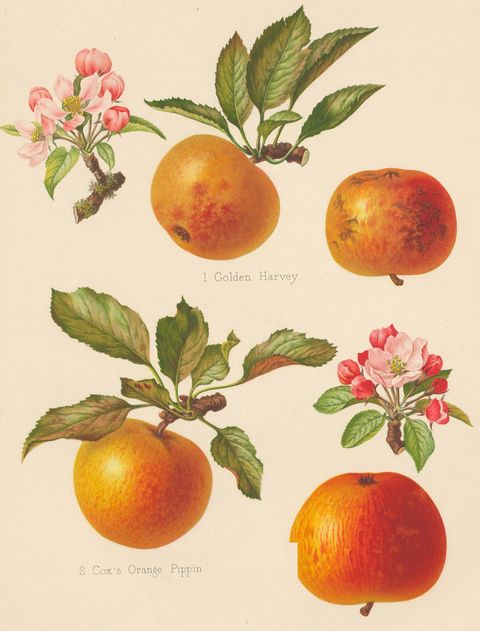
Week of 7 October 2024 · Plate XVI
Malus domestica 'Cox's Orange Pippin'