Frederick William Smith del. · Orr & Smith, London
Week of 2 February 2026
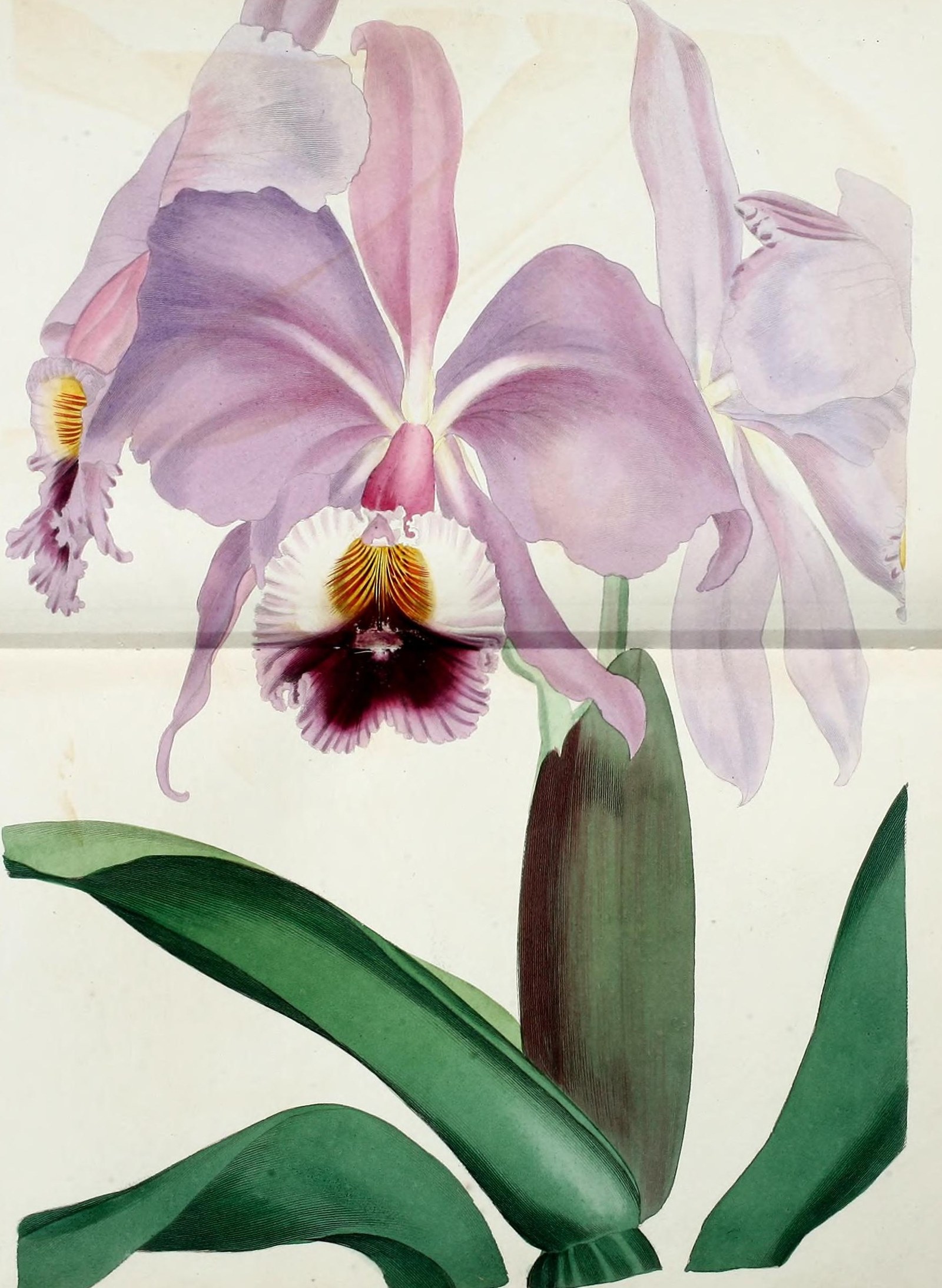
Crimson-lipped cattleya
Part 2 of 6 in Paxton's greenhouse
Cattleya labiata
The orchid that started the orchid craze, found in Brazil in 1818 and lost again for seventy years, drawn for Paxton's Magazine when every collection in England wanted one.
- Published
- volume 4, 1838
- From
- Paxton's Magazine of Botany
- Drawn by
- Frederick William Smith
- Technique
- Hand-coloured engraving
- Family
- Orchidaceae
- Native to
- The coastal mountains of north-eastern Brazil
About the plant
In 1818 William Swainson, collecting in Brazil, wrapped a consignment of mosses and lichens in some tough-leaved plants he found growing on the trees and sent the lot to England. William Cattley, a merchant at Barnet with a greenhouse and a curious mind, potted up the packing to see what it would do, and in November 1818 it opened the largest and most splendid orchid flower anyone in England had seen: rose-pink, a hand across, with a frilled lip of crimson and gold. John Lindley named the genus Cattleya for him in 1824. By then the plant had been lost; Swainson's locality was never recorded, and for seventy years every collector in Brazil hunted for it without success until it turned up in Pernambuco in 1889.
The flower that Cattley raised from the packing started the orchid craze. Within twenty years the great gardens of England were building orchid houses and sending collectors to the tropics, and Paxton, whose employer the Duke of Devonshire had one of the first great collections at Chatsworth, figured the crimson-lipped cattleya in 1838 from a plant there, with instructions for growing it on a block of wood in the stove. It remains the type of the genus and the ancestor of the corsage orchids of the twentieth century.
Bought together
More in the archive