Alice B. Ellis and Edith E. Bull del. · G. Severeyns, Brussels · Jakeman & Carver, Hereford
Week of 30 September 2024
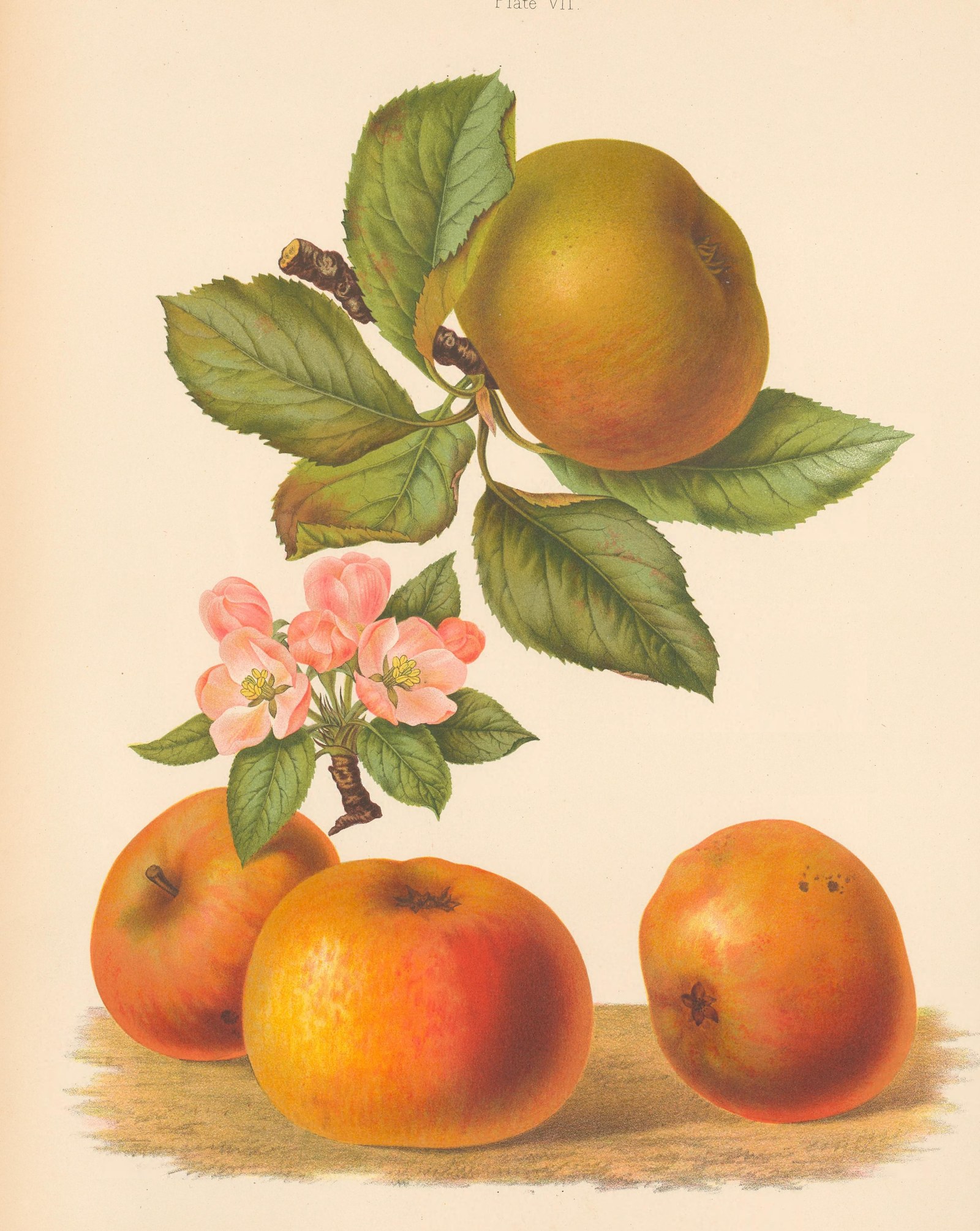
Blenheim Orange
Part 2 of 6 in Apples and pears of Herefordshire
Malus domestica 'Blenheim Orange'
The Blenheim Orange, found as a seedling against the park wall at Woodstock, painted from the fruit with its blossom for the Herefordshire Pomona, the grandest of English fruit books.
- Published
- Plate VII, volume 1, 1877
- From
- The Herefordshire Pomona
- Drawn by
- Alice B. Ellis and Edith E. Bull
- Technique
- Chromolithograph
- Family
- Rosaceae
- Native to
- Woodstock, Oxfordshire, about 1740
About the plant
The Woolhope Naturalists' Field Club of Hereford set out in 1876 to record every apple and pear worth growing in the cider county before the old orchards disappeared, and the result, the Herefordshire Pomona, was the grandest fruit book England ever produced: 77 plates painted from the fruit by two local artists, Alice Ellis and Edith Bull, printed in colour by Severeyns of Brussels and issued in seven parts to six hundred subscribers over nine years, with the apples drawn at natural size and the blossom beside them. The text, by Dr Henry Bull and Robert Hogg, is still the authority on the old varieties.
The Blenheim Orange is one of the great English apples. About 1740 a tailor named George Kempster found a seedling growing against the wall of Blenheim Park at Woodstock and planted it in his garden, where it became famous as Kempster's Pippin and people came from miles to see the tree. Renamed for the duke's palace, it was in every orchard by the 1820s: a big round apple, dull yellow flushed with orange and red, with a dry, nutty, slightly sharp flesh that is as good baked or in a charlotte as it is eaten raw in November. The tree is slow to start, enormous when grown and lives for a century.
Bought together
More in the archive
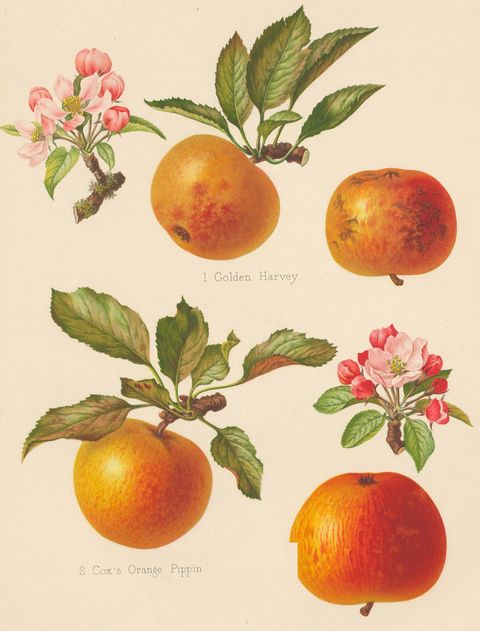
Week of 7 October 2024 · Plate XVI
Cox's Orange Pippin
Malus domestica 'Cox's Orange Pippin'
From £10
Buy